Powered By Blogger

Friday, April 29, 2011

Symbols in Their Eyes Were Watching God

Pear Tree
http://www.ettingersgardencenter.com/products.html

  1. Roots of Trees- African people without any roots
  2. Pear Tree- Janie's budding womanhood/ coming of age
  3. The Mule- the black woman's experience. She does the worst jobs for white people and black men. She gets "walked on." Logan buys Janie a mule to represent how he is tired of treating Janie like a princess or white woman, and now he wants her to do the heavy labor jobs around the farm.
  4. The Gate and the Road-opportunity; Related to the metaphor at the beginning. The Gate is the shore and the Road represents the waves as Janie looks down  the road to find a new dream.
  5. The New Horizon- Janie is constantly looking over the gatepost, down the road, to a new horizon (a dream or new start).
  6. The Eatonville general store- represents the center of this first all-black town.
  7. The illumination of the lamppost represents the start of a new all-black town. It also shows that Joe Starks is all-powerful and likes others to bow down to him, including Janie.
  8. Joe and Janie's two-story house- seems to represent his similarity to a plantation owner, while the hard-working townspeople live in a small shack-style homes like servants' quarters.
  9. Tobacco spittoon- This represents again how wealthy Joe is.
  10. Janie's head rag- bondage to Joe
  11. Guitar-playful side of people
  12. Overalls- working side
  13. Packet of seeds- new life, rebirth, remembering
  14. Janie's long braid- freedom
  1. Color blue- Tea Cake and Janie's proof of love for each other
  2. Fish- sharing relationship
  3. Checkers- Janie's equality with Tea Cake, but not Joe
  4. Booker T/Ms. Turner- racism within a race
  1. Muck- the rich dirt, working class, growth
  2. Hurricane- God's almighty power
  3. Rabid dog- when good things happen, life changes

Thursday, April 14, 2011

Hurston's Reviews

           The novel Their Eyes Were Watching God by Zora Neale Hurston did not always get positive reviews. Although Hurston was a great African American writer during the Harlem Renaissance, other famous writers gave her negative feedback. Their Eyes Were Watching God was admired by white authors, but some African American writers did not approve of Hurston’s portrayal of African American men and women, the stereotypes reinforced, and the idyllic life in the book.
One of the people that reviewed Zora Neale Hurston’s novel Their Eyes Were Watching God was Richard Wright, an African American writer. Wright stated, “Miss Hurston voluntarily continues in her novel the tradition which was forced upon the Negro in the theatre, that is, the minstrel technique that makes the "white folks" laugh. Her characters eat and laugh and cry and work and kill; they swing like a pendulum eternally in that safe and narrow orbit in which America likes to see the Negro live: between laughter and tears.” Wright also said that the book carried no theme or message. He wanted all black writers to praise his race and portray the black characters as middle class who supported their nationality, and Hurston wrote her stories like she was rejoicing the black community and individualism. She was criticized for not addressing racial issues, and she criticized Jim Crow laws.
I think that her harsh reviewers were very judgmental. She just wrote what happened to be on her mind. I disagree with her critics. I do not think that Hurston deserved these reviews. She did not divide her characters by race, but she wrote as if each character is an individual, which they are. Hurston did not seem to be offending specific people, but the critics said that she was “making their race look bad.” Some people might say that I say that I disagree just because I am white, but I am pretty sure there are African Americans that do enjoy reading this book. Although it is referred to as fiction, the reader can still understand how life was like during the time of the Harlem Renaissance. I think that this book is very interesting so far, and Hurston is a great writer. Her imagery helps define the meaning of her story. She makes the reader feel like they are at the scene in the book.


Richard Wright
http://www.math.buffalo.edu/~sww/wright/wright0.html


Sources:

Monday, April 4, 2011

Zora Neale Hurston


http://www.masoncreations.com/Black%20
History%202011/Period%201%20-%20Black%20History
%20Website/Black%20History,%20Imani%20Arrington/
Zora%20Neale%20Hurston.html
·         She was born in Notasulga, Alabama in 1891 and died in 1960.
·         She was raised in Eatonville, Florida, the first all-black town in the United States.
·         Hurston was an American writer, folklorist, and anthropologist.
·         She influenced the writers of the Harlem Renaissance.
·         She went to Howard University, Barnard College, and Columbia University.
·         At Columbia University, she was tutored by the German American anthropologist Franz Boas.
·         She collected folklore in Jamaica, Haiti, Honduras, and Bermuda.
·         She is known for her metaphorical language, her story-telling abilities, and her interest in and celebration of Southern black culture in the United States.
·         Her best-known novel is Their Eyes Were Watching God (1937).
·         Hurston’s writings were rediscovered in the ‘70s by a different generation of black writers, and they were republished.

Works Cited:
"Zora Neale Hurston." Microsoft® Student 2009 [DVD]. Redmond, WA: Microsoft Corporation, 2008. 

http://newsone.com/nation/black-history-month
/news-one-staff/the-storyteller/
https://honors.rit.edu/amitraywiki/index.php/Zora_Neale_Hurston

Monday, March 28, 2011

Launching Into The Harlem Renaissance!

·         The Harlem Renaissance was in the 1920s and early 1930s.
·         It emerged toward the end of World War I in 1918.
·         It was an African American cultural movement.
·         The Harlem Renaissance was the development of African American literature, music, theater, art, and politics.
·         It was centered in the Harlem neighborhood in New York City.
·         It is also known as the New Negro Movement, Negro Renaissance, and New Negro Renaissance.
·         It marks the first time that African American literature and art was taken seriously.
·         Throughout the Harlem Renaissance, sixteen black writers published more than 50 volumes of poetry and fiction.
·         Charles S. Johnson of the National Urban League hosting a dinner to recognize the new literary talent, the publication of Nigger Heaven (1926) by white novelist Carl Van Vechten, and the production of Fire!!, a literary magazine, launched the Harlem Renaissance.
·         It changed forever the dynamics of African American arts and literature in the United States.


Josephine Baker 

a picture of Josephine Baker
 from Student Encarta

·         Josephine Baker was born in 1906 and died in 1975.
·         She was a singer and a dancer.
·         She moved to Paris, France, in the mid-1920s.
·         She helped introduce European audiences to African American dances and music.
·         She starred in several motion pictures.
·         In one of her jungle dances, she wore a skirt of bananas.
·         Her signature song is “J’ai deux amours” (I Have Two Loves), and it referred to her love for two countries, the United States and France.

Click Here to listen to her signature song.


A picture of Claude McKay from Student Encarta
Claude McKay


·         He was born in Jamaica in 1890 and died in 1948.
·         He was an American writer.
·         He was known for his poems and novels of black life.
·         McKay’s first novel was Home to Harlem (1928).
·         He converted to Catholicism.

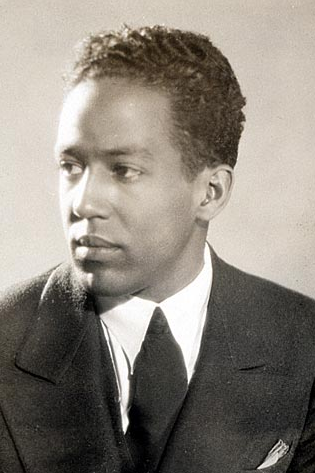
A picture of Langston
Hughes from Student Encarta
Langston Hughes


·         He was born in 1902 and died in 1967.
·         He was an American writer
·         In his poetry, he was known for using the rhythm of jazz and of everyday Black speech.
·         His first poem was “The Negro Speaks of Rivers.”
·         He wrote the drama Mulatto, which was performed on Broadway 373 times.
·         Hughes wrote more than 50 books, but he is best-known for his poetry.


Works Cited:
"Claude McKay." Microsoft® Student 2009 [DVD]. Redmond, WA: Microsoft Corporation, 2008.
"Josephine Baker." Microsoft® Student 2009 [DVD]. Redmond, WA: Microsoft Corporation, 2008.
"Langston Hughes." Microsoft® Student 2009 [DVD]. Redmond, WA: Microsoft Corporation, 2008.
Wintz, Cary DeCordova. "Harlem Renaissance." Microsoft® Student 2009 [DVD]. Redmond, WA:     Microsoft Corporation, 2008. 


Friday, March 25, 2011

Welcome to the Fourth Quarter!

   This year has gone by so fast! It is already the fourth quarter, and the school year is almost over. It feels like it is still September! Anyways, I have made a lot of new friends this semester. I am now officially on the John Carroll badminton team! Yay! We have our first match today! Hopefully, we will win. I am looking forward to the next three years at John Carroll. Next year, I am planning to take Honors English again. This year has been great so far. I also cannot wait for summer 2011!

http://www.fasilitassport.com/tag/badminton

Thursday, March 24, 2011

Into The Wild Final Project

My Life Had Changed!

When we met in January 1992,
I had made up my mind that I wanted to adopt you.
I taught you the secrets of leatherwork, and you made a belt.
Boy! It was so deeply creative and heartfelt!
I even asked you if you would like to be my grandson,
But you said, “We’ll talk about it when I get back from Alaska, Ron.”
You were a very smart kid,
And I truly admired what you did.
Everything seemed to be over when I was a drunk after the death of my son and wife,
But you helped me create a new and improved life.
I followed as you had done,
And I camped in the desert for adventure and fun.
I was greatly impressed by the things you knew and said,
On my way to the hot springs, a hitchhiker told me that you were dead.
My prayers did not work, so I became an alcoholic and an atheist.
Chris, I want you to know that you are sincerely missed.
After all that we did, I even drove you to Grand Junction.
Leaving the Church seemed to be the only option.
My life had changed since the moment we met,
And that impact is something I will never forget.

Sunday, March 20, 2011

Christopher McCandless Characterization Chart

Chapter
Page Number
Quote/Description
Impression
1
4
Five feet seven or eight with a wiry build
Chris is underweight and not healthy.
1
6
"I won't run into anything I can't deal with on my own."-Chris McCandless
Chris thinks he is prepared to  go into dangerous situations.
1
6
"He was determined. Real gung ho. The word that comes to mind is excited."-Gallien

2
12
"S.O.S. I need your help. I am injured, near death, and too weak to hike out of here. I am all alone , this is no joke. In the name of God, please remain to save me. I am out collecting berries close by and shall return this evening. Thank you, Chris McCandless. August?"

Chris did not want to die that way. He wanted to be saved.
2
12
A peek through a window revealed a Remington rifle, a plastic box of shells, eight or nine paperback books, some torn jeans, cooking utensils, and an expensive backpack.
Chris had many hobbies. Hiking into the wild wasn't the only thing that interested him.
3
18
He always had to know the absolute right answer before he could go on to the next thing.

3
20
Chris graduated from Emory University in Atlanta, where he'd been a columnist for, and editor of, the student newspaper, The Emory Wheel, and had distinguished himself as a history and anthropology major with a 3.72 grade-point average.
He was very smart.
3
21
"I'm going to have to be real careful not to accept any gifts from them[his parents] in the future because they will think they have bought my respect."- Chris McCandless
Chris does not think that people should buy respect; they should earn it.
4
29
telling the truth was a credo he took seriously
He did not like lying or liars.
4
29
McCandless documented the burning of his money and most of the events that followed in a journal-snapshot album
He liked to keep a record of things, so he could keep track of everything he did.
5
45
"He had an amazing voice. He drew quite a crowd."-Jan Burres

5
46
"He was smart. He'd figured out how to paddle a canoe down to Mexico, how to hop freight trains, how to score a bed at inner-city missions. He figured all of that out on his own, and I felt sure he'd figure out Alaska too."-Jan Burres
Chris knew how to adjust to the hardships of living in the wilderness.
6
52
McCandless's face would darken with anger and he'd fulminate about his parents or politicians or the endemic idiocy of mainstream American life.
Chris searched for equality in the world. He wanted social justice for everyone.
6
55
McCandless was thrilled to be on his way north, and he was relieved as well--relieved that he had again evaded the impeding threat of human intimacy, of friendship, and all the messy emotional baggage that comes with it.
He liked to be  around people, but he did not like developing relationships because relationships caused him problems.
7
64
Both father[Walt] and son[Chris] were stubborn and high-strung.

7
65
remained largely or entirely celibate, as chaste as a monk
He respected life.
10
102
'Chris almost always had short hair and was clean-shaven. And the face in the picture was extremely gaunt."-Sam McCandless
Chris changed.
11
107
"Even when we were little, he was very to himself. He wasn't antisocial -- he always had friends, and everybody liked him -- but he could go off and entertain himself for hours. He didn't seem to need toys or friends. He could be alone without being lonely."-Carine McCandless

11
113
On weekends, when his high school pals were attending "keggers" and trying to sneak into Georgetown bars, McCandless would wander the seedier quarters of Washington, chatting with prostitutes and homeless people, buying them meals, earnestly suggesting ways they might improve their lives.
He wanted the best for everyone and didn't care about his 'social status.'
12
118-119
"If you attempted to talk him out of something, he wouldn't argue. He'd just nod politely and then do exactly what he wanted."-Walt
He didn't care about other people's opinions.
12
122
"If something bothered him, he wouldn't come right out and say it. He'd keep it to himself, harboring his resentment, letting the bad feelings build and build."-Carine

12
122
He could not pardon the mistakes his father had made as a young man, and he was even less willing to pardon the attempt at concealment.
He was unforgiving.
13
128
"Chris didn't think twice about risking his own life, but he never would have put Buckley in any kind of danger."-Carine
Chris respected life and would never force any kind of danger on someone.
13
129
Chris and Carine were uncommonly close.

16
159
"He was a dandy kid. Real courteous, and he didn't cuss or use a lot of that there slang. You could tell he came from a nice family."-Gaylord Stuckey
Chris gave great impressions on people.
16
159
"He wanted to prove to himself that he could make it on his own, without anybody else's help."-Gaylord Stuckey

17
174
He simply got rid of the map.
He was spontaneously travelling and didn't know  what was going to happen next.
17
183
McCandless went into the wilderness not primarily to ponder nature or the world at large but, rather, to explore the inner country of his own soul.

18
198
"Chris would never, ever, intentionally burn down a forest, not even to save his life. Anybody who would suggest otherwise doesn't understand the first thing about my brother. "-Carine

18
199
Chris is smiling in the last picture taken of him.
Although he was suffering, he felt accomplished and died happily.
  

Reaction:
                While reading the book, I thought that Chris McCandless was prepared and not crazy. It seemed like he knew what he was doing, but towards the end of the book, I changed my mind. He was not as prepared as he seemed. I think that he was a reckless idiot, and he was a narcissist who perished out of arrogance and stupidity. He realized that happiness is only real when it is shared. Into the Wild is a very tragic story. At least, McCandless realized that he was somewhat wrong about life and enjoyed his journey. I feel bad for what had happened to him.